Stories and shlokas · for iPhone
The stories you grew up with, tonight.
Rama, Krishna, Ganesha and Hanuman, told warmly for little ears. One story, one shloka, and a calm goodnight.


What changes at your house
Peace at bedtime.
The last hour of the day stops being a negotiation and ends in quiet instead.
Kids who know the stories.
Rama and Sita, little Krishna, Ganesha and Hanuman: the stories of your family, passed on with warmth.
A habit that holds.
A few minutes a night, the same gentle ritual, until it is simply what your family does.
Tonight's ritual
How tonight goes
Pick tonight's story.
Open the app together and choose. Most stories are written four times over, once for each age, so every child hears the telling made for them.
Snuggle up and read together.
One story, written to be read aloud and short enough for a school night, then three gentle questions to talk over.
Say the shloka, then lights out.
A short shloka closes the day, in Sanskrit, simple transliteration, and plain English. No feeds, no noise, nothing left to tap.
The library
Stories they will ask for by name.
The Ramayana and the Mahabharata, Krishna, Vishnu, Shiva, Ganesha, Hanuman and Devi, the Panchatantra and Hitopadesha fables, and the stories behind the festivals. Most are written four separate times, once for each age: 2 to 3, 4 to 6, 7 to 8, and 8 and up.
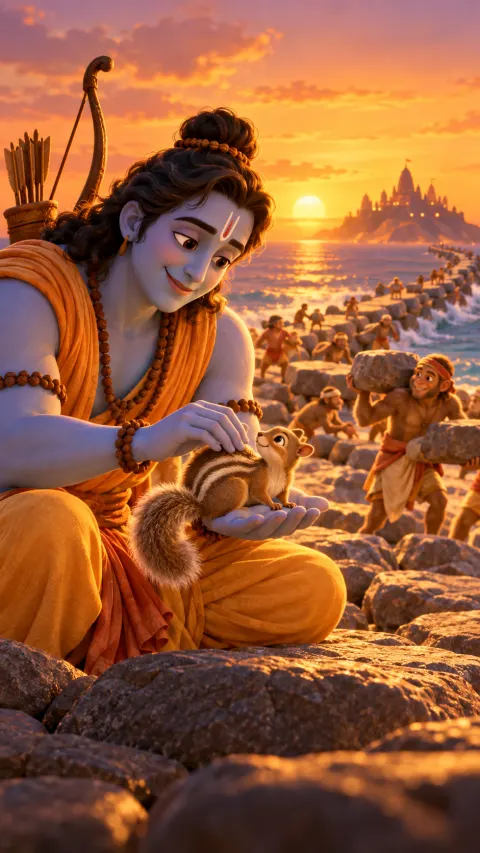
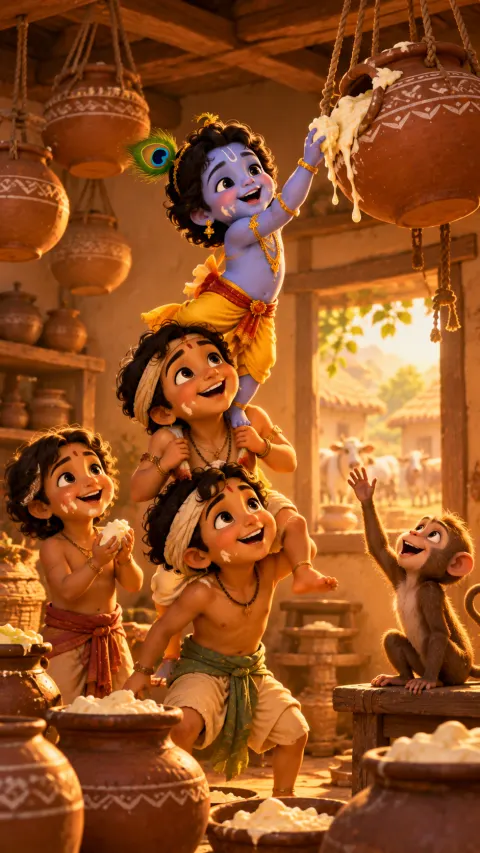
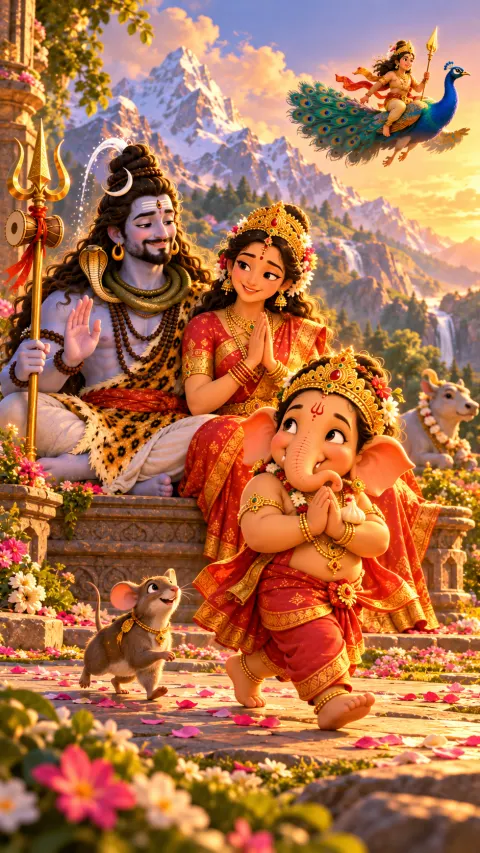
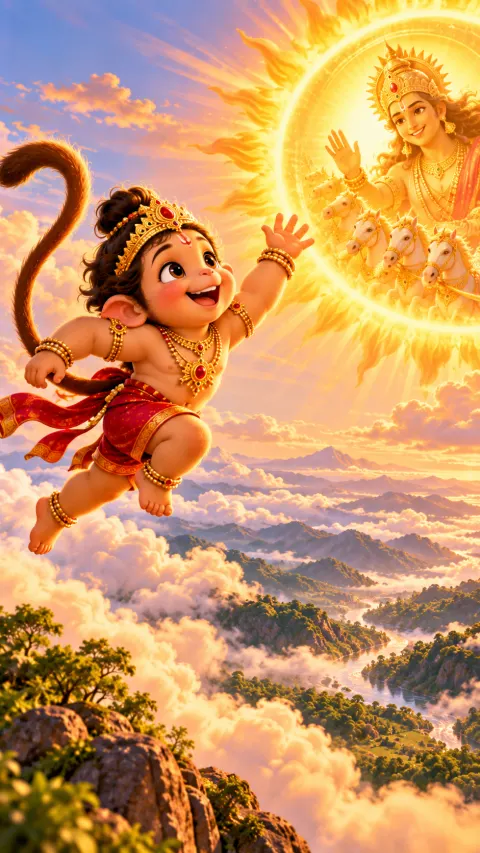
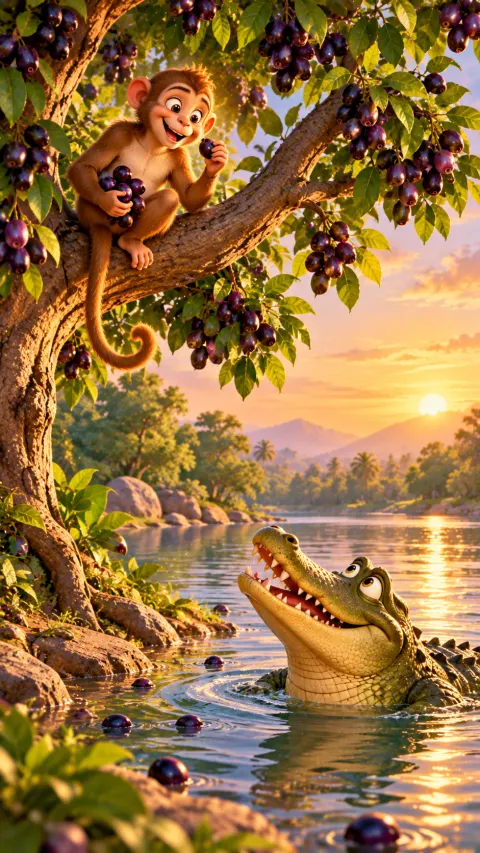
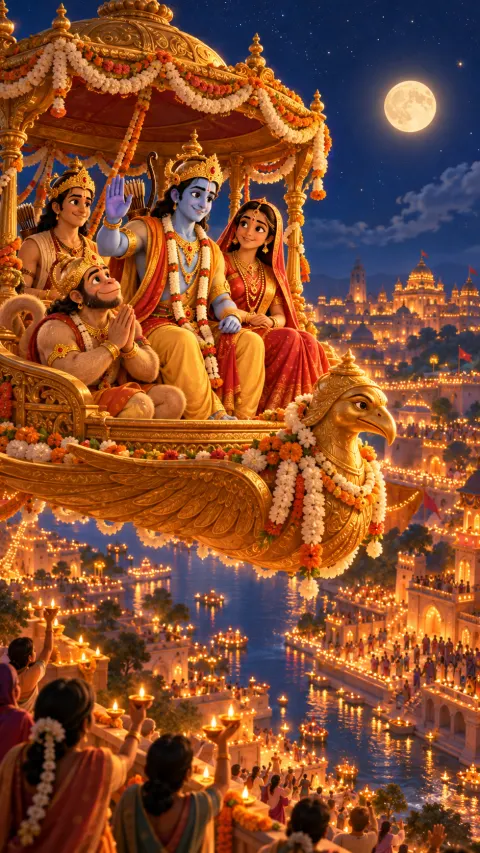
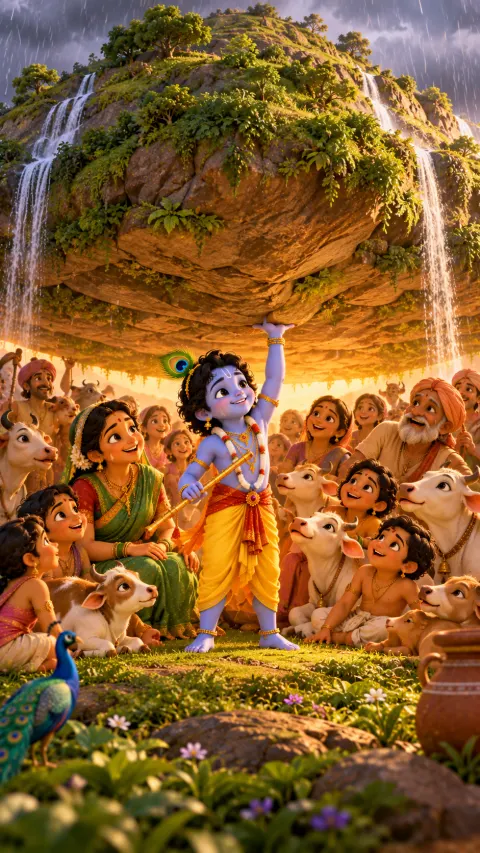
and 91 more for every night
- How Ganesha Got His Elephant Head
- Prahlad and Holika
- Why We Light Lamps on Diwali
The same little squirrel, the same pot of butter, the same race around the world, written four times over: short and simple for a two-year-old, fuller and richer for a child of eight and up. You set each child's age once, and the stories grow with them.
Tamaso ma jyotir gamaya.
Lead me from darkness to light.
Brihadaranyaka Upanishad 1.3.28
Bedtime Hindu Stories by the numbers
A note from the maker family
We made this for our own kids.
We built the app we wanted at 9pm with tired kids and a lamp on. Made by a family, for families.
No ads, ever, and no data sold. Your children's names and ages never leave your phone.
Every story is told with care and closes with a short shloka in Sanskrit, a simple transliteration, and its meaning in plain English, so the old words become familiar ones at your house too.
From our family to yours, shubh ratri. Goodnight.
Questions
Asked by parents like you.
What ages is it for?
Children ages 2 to 10. Most stories are written four separate times, once for each age band: 2 to 3, 4 to 6, 7 to 8, and 8 and up. A few of the bigger stories are told only for older children. A toddler hears short, warm sentences and an older child gets the fuller telling. You set each child's age once and the app shows you the telling made for them.
Is it safe for kids and ad-free?
Yes. There are no ads of any kind, no external links inside the reading experience, and we never sell data. Your children's names and ages stay on your device.
Which stories are included?
98 stories across the Ramayana, the Mahabharata, Krishna, Vishnu, Shiva, Ganesha, Hanuman and Devi, the Panchatantra and Hitopadesha fables, and the festivals: The Squirrel and the Bridge, How Ganesha Got His Elephant Head, The Butter Thief, Baby Hanuman Swallows the Sun, Krishna Lifts Govardhan Hill, Prahlad and Holika, Why We Light Lamps on Diwali, and many more.
What is the shloka at the end of each story?
Every story pairs with a short shloka: the Sanskrit line, a simple transliteration so anyone can say it aloud, and its meaning in plain English. Each story also comes with three questions to talk over together before lights out.
Does it work offline?
Yes. Stories live on your device once the app is set up, so bedtime works in airplane mode, at Nani's house, or anywhere the signal is poor.
What does a subscription include?
Everything: all 98 stories with their shlokas and questions, every age telling, streaks, badges and collections, and every story we add after launch. It is $39.99 a year after a 7-day free trial, or $3.99 a week. One subscription covers the whole family.
How do I cancel?
Subscriptions are handled by Apple, not by us. Open Settings on your iPhone, tap your name, tap Subscriptions, choose Bedtime Hindu Stories, and tap Cancel. That is the whole process, and you keep access until the end of the period you paid for.
Which tradition do the stories come from?
The stories come from the Ramayana and the Mahabharata, the Puranas, and the Panchatantra and Hitopadesha fables, retold gently for children. They are not tied to one sampradaya, region, or language, so families in India and across the diaspora can share them together.
Is there an Android version?
Not yet. Bedtime Hindu Stories is on iPhone for now.
One story, one shloka, lights out.
Set up in about a minute. Tonight can be night one.